A Year in British Motifs: 12 Seasonal Ideas for a Pattern Calendar
Twelve months, twelve motifs, one project. That is the whole idea: a gentle rhythm that gives you something specific to draw, carve or stitch each month, without the blank-page panic of an open brief. Britain is generous here, because our seasons arrive in small, legible details rather than grand gestures. The first snowdrop in a churchyard. A hawthorn hedge in late April, thick with blossom and smelling faintly of almonds. The sudden weight of conkers in your coat pocket in October. Build a calendar around those details and you finish the year with a body of work that reads as a place, not just a pattern library.
Set the frame before you set the motif
Choose your format first, because constraints are what make a year-long project survivable. A workable default is one swatch a month at a fixed size — 15cm squares work well — in a single medium. Ink and watercolour, linocut, hand embroidery, or vector drawing on a tablet: pick one and allow yourself a guest technique once a quarter if you get restless.
Then decide how the twelve will live together. Sewn into a three-by-four grid, they become a wall hanging or a quilt. Kept as loose squares, they become a tea towel or a set of greetings cards. Scanned and tiled, they become a digital pattern collection.
A few rules keep the set coherent:
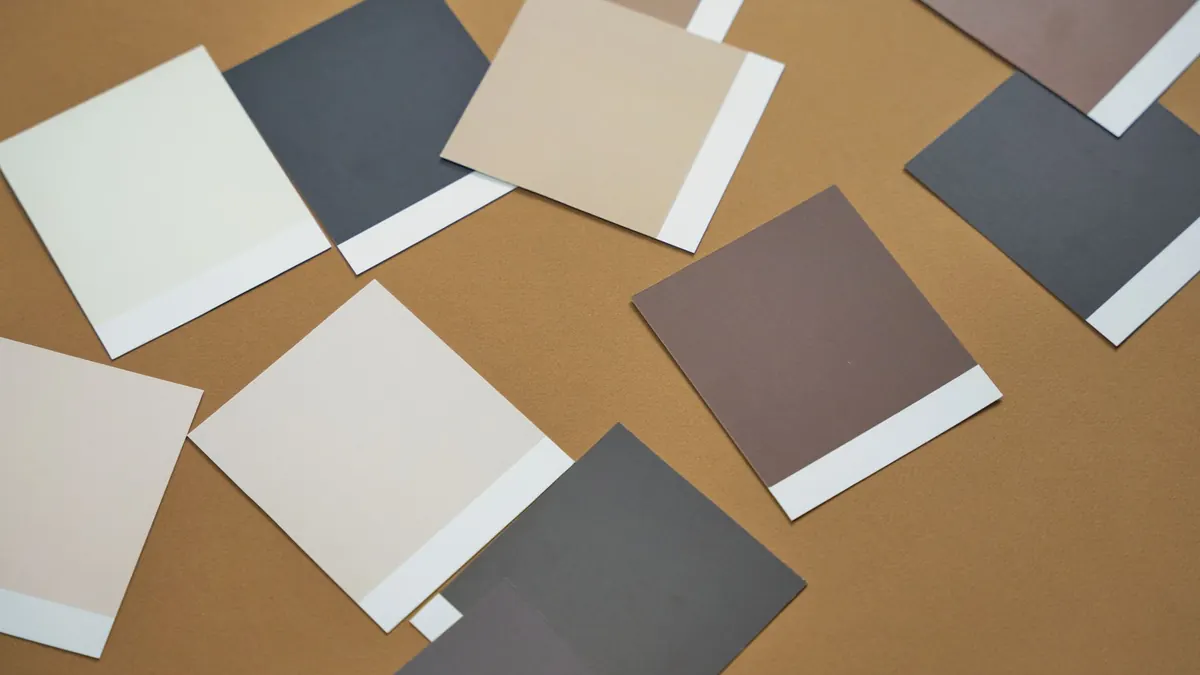
- Four seasonal palettes, five colours each, pulled from photographs you take yourself.
- Two versions of every motif: a single standing element, and a simple repeat.
- Notes on the back of each swatch — date, place, colours mixed.
- One catch-up week per quarter, left deliberately empty.
January to March — frost, snowdrops, celandine
January: window frost. Skip the cartoon snowflake. Look instead at real frost on a cold window: ferny, angular, radiating from a single point. That radial structure suits a medallion repeat, or keep the crystals small and sparse for a scattered half-drop. Palette of blue-grey, white and ink black.
February: snowdrop. Three outer petals, three inner, each marked with green. The head droops, so draw it in profile and let the stem curve. Snowdrops reward small scale — shrink them until the repeat reads as texture rather than flower.
March: daffodil and lesser celandine. Celandine is the better motif: small, glossy, star-shaped, growing in yellow-green verges. Use the daffodil as a single twisted trumpet and the celandine as filler in a tossed repeat. Yellows print badly, so test on scrap and use two — a warm ochre and a sharp lemon — rather than one flat colour.
April to June — blossom, bluebells, wild rose
April: hawthorn blossom. Think branch, not flower head. Clouds of tiny five-petalled flowers with dark stamens on grey-brown wood. A trailing branch makes a natural border; for an all-over, break the branch into small clusters and let them float.
May: bluebell wood. The blue is the challenge — mix ultramarine with a touch of violet and steer clear of flat cobalt. Bluebells all hang the same way, so a directional or half-drop repeat is more honest than a tossed one. Overlap the stems so it reads as a wood rather than a row of flowers.
June: dog rose and elderflower. The rose is five pink petals with prominent stamens on arching, thorny stems. Elderflower, simplified, becomes a flat cream disc with a dotted centre — a useful texture element. Combine both as a trailing sprig repeat.
July to September — lavender, seaside, hedgerow
July: lavender and bumblebee. A bumblebee is a fuzzy striped oval with translucent wings, and it needs restraint. One bee per tile reads as a spot, four reads as a swarm. Pair with deckchair stripes — block bands with a slight wobble, as though screenprinted.
August: pebbles and seaside. Irregular rounded pebble forms in warm greys and ochres are forgiving to draw and forgiving to repeat. Lay them on a grid and then displace the rows slightly so the pattern feels gathered rather than plotted. Add a shell or a windbreak stripe if you want a focal shape.
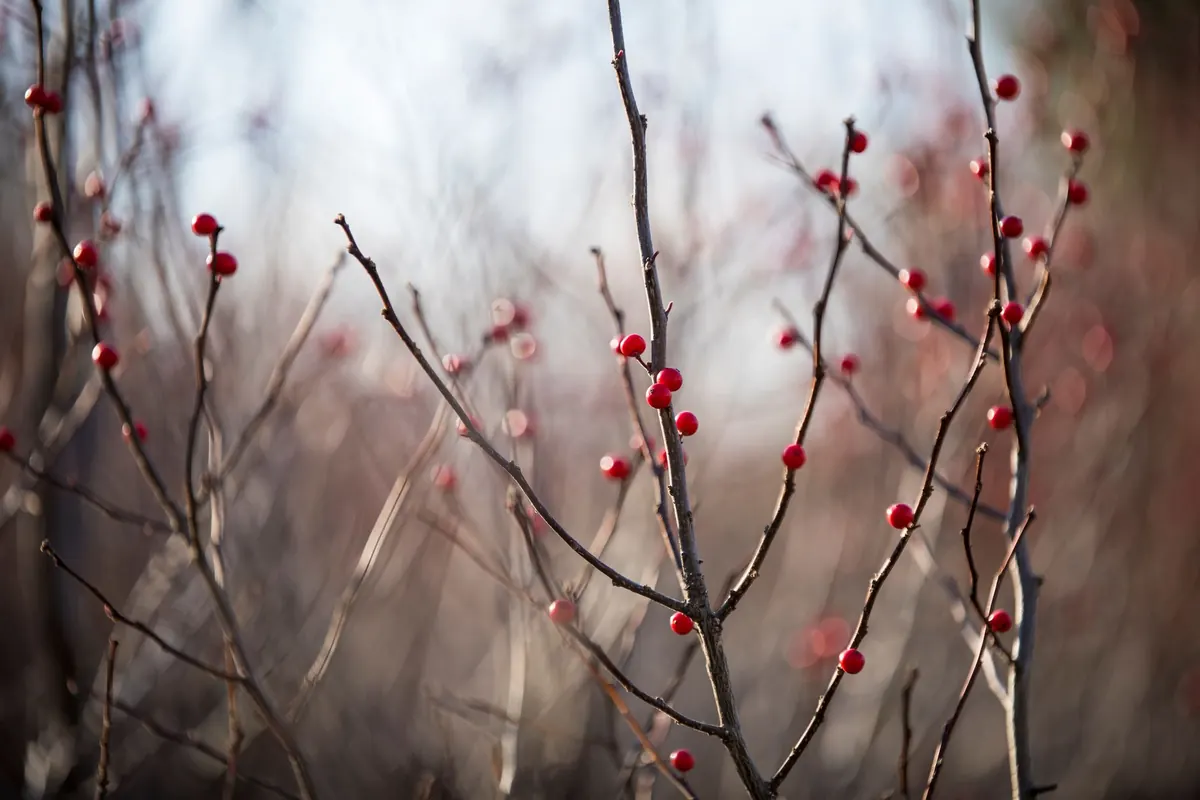
September: hedgerow harvest. Blackberries, sloes, rosehips, hazelnuts. Berries scatter well, and the thorns and leaves provide the connective lines. Deep purple, crimson, moss green and buff.
October to December — conkers, bonfires, midwinter
October: oak, acorn and conker. Oak leaf lobes are good practice in silhouette. A conker is glossy mahogany with a pale scar, so describe the shine with a light grey highlight shape — a habit worth carrying into every autumn motif.
November: fireworks and bonfire. Sparks, whorls, rocket trails and curled smoke. Smoke ribbons make excellent thin lines for borders. Charcoal, ember orange, ochre and a navy sky.
December: holly, robin and tartan. The robin is a round shape, an orange breast, thin legs. Holly and ivy are familiar enough to go generic quickly, so work from real leaves and keep the irregular edges. Finish with a tartan or tweed check: a simple sett of lines and blocks, and a welcome change of pace from drawing.
The twelve prompts at a glance
- January — window frost
- February — snowdrop
- March — lesser celandine and daffodil
- April — hawthorn blossom
- May — bluebell wood
- June — dog rose and elderflower
- July — lavender and bumblebee
- August — pebbles and deckchair stripes
- September — hedgerow berries
- October — oak leaf, acorn and conker
- November — firework spark and smoke ribbon
- December — holly, robin and tartan check
Keeping the year on track
Work small and finish the month's piece rather than perfecting it. A finished swatch that is slightly clumsy is worth more than a beautiful sketch you never resolve. Keep everything in one box or portfolio so nothing drifts, and photograph each finished tile in daylight as you go — the contact sheet at the end is proof of progress when January feels a long way off.
At the end of the year, lay all twelve out together. You will almost certainly find two or three colours doing all the work and one or two fighting the rest. Adjusting a single hue across the set is the fastest way to make twelve separate pieces look like a collection.
One practical note on sources: traditional motifs — willow pattern, fair isle, folk embroidery — are shared heritage and fair game to reinterpret. A living designer's pattern is not. Draw from the hedgerow and your own photographs, and if you plan to sell or licence anything, check the terms of any fonts, brushes or stock imagery you have used.
Photo: GoranH / Pixabay